
Gods and Monsters
1998 · 105 min · Director: Bill Condon
Show plot summary (may contain spoilers)
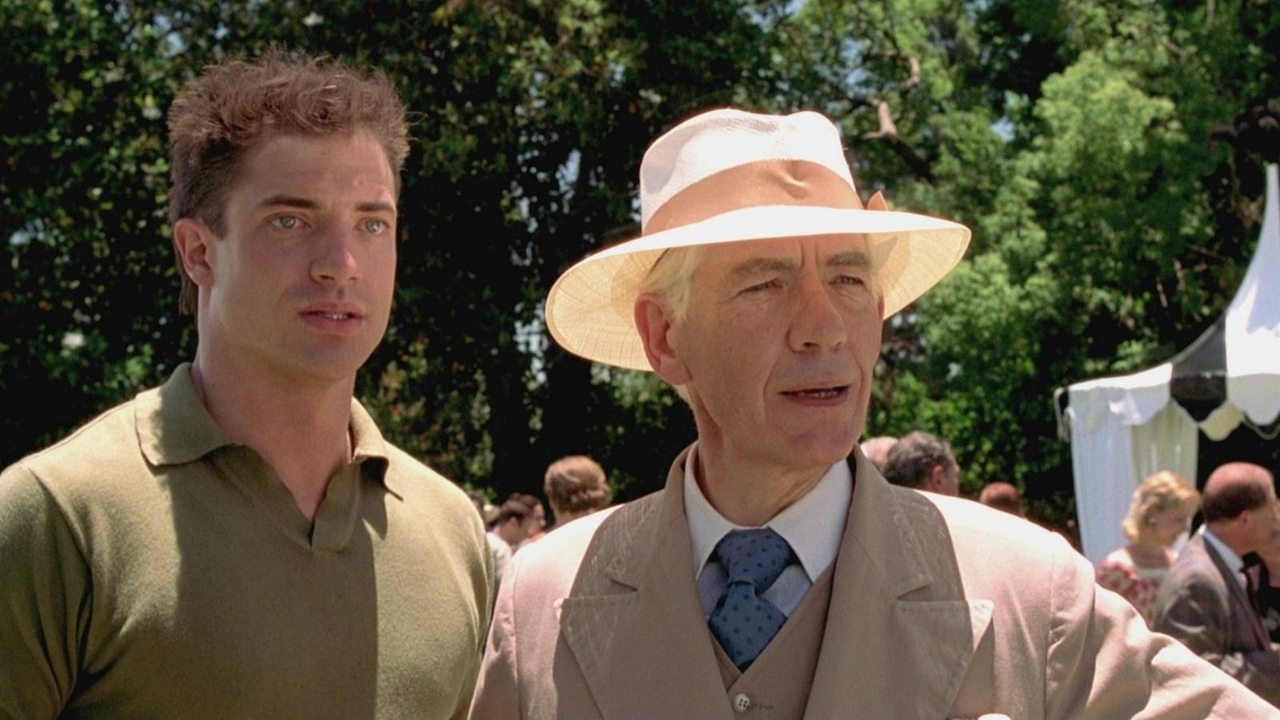
1957. Long having retired, James Whale, arguably most famous for directing Frankenstein (1931) and Bride of Frankenstein (1935) among some other 1930s horror classics, has burned his bridges with the Hollywood community in that they have abandoned him, the possible exception being his continuing friendship with former lover David Lewis. James had been openly gay even during his working period and is in declining health. Having been recently released from a hospital where he was recuperating from a stroke, he left with some permanent health issues, the aftermath of the stroke. Much against the disapproval of his loyal longtime housekeeper Hanna, his health does not prevent him from toying with the handsome young men who may wander into his midst in his continuing homosexual desires, although Hanna is as much, if not more concerned about any of those young men taking advantage of him in his elderly and fragile state. The young man who catches his eye among the most recent is Clayton Boone, who Hanna had hired to do garden work around the property. Clay, an ex-marine from the proverbial "wrong side of the tracks", has no idea who James was or is before he starts this job. James and Clay soon begin a friendship of sorts. Clay is also unaware of James' homosexual orientation before such is confirmed by Hanna, an issue which threatens his masculinity, especially in light of the cracks showing in his casual sexual relationship with a slightly older and wiser diner waitress named Betty. Clay has to reconcile that threat against being in the company of someone whom he considers an interesting and once famous man. The friendship and his state of health related to the stroke lead James to reflect in a bittersweet vein on key points of his life, most notably serving in WWI, and as a result reveals his ulterior motives through the actions he takes toward Clay.
Emotional fingerprint
Gods and Monsters (1998) — Movie. Top emotional signals: Empathy 35%, Melancholy 25%, Nostalgia 20%. Source: AI estimate. Shares describe emotional signal, not percentages of people. Your experience may differ. How we measure
- Empathy35%
- Melancholy25%
- Nostalgia20%
- Love10%
- Inspiration10%
AI estimate · no viewer votes yet
How we measure
AI estimate
Share of emotional signal, not the percentage of people or a probability of enjoyment.
Each viewer contributes one response, split equally across their selected emotions. When available, an automated estimate supplies a prior that is blended with those responses. Counts include distinct viewers, not automated estimates or archived anonymous votes. Fewer than 3 viewers is an early estimate; more responses do not guarantee certainty.
Why it feels this way
The strongest emotional signals are Empathy, Melancholy, Nostalgia. Genres: Drama, Biography. AI estimate.
Is it worth watching?
Consider this title if you are looking for Empathy, Melancholy and Nostalgia. Its IMDb rating of 7.3/10 suggests a generally positive audience reception. For these leading emotions, its Feel Score is 74/100.
How did it make you feel?
Votes are saved to the fingerprint once you’re signed in.
Pick up to three · 0/3
Emotional journey
- Sadness
- Empathy
- Tension
Not enough subtitle evidence
No dominant emotion
Dominant emotion: Curiosity
Dominant emotion: Tension
Dominant emotion: Humor
Dominant emotion: Empathy
Dominant emotion: Sadness
Dominant emotion
| % | Approximate minute | Dominant emotion | Overall intensity | Sadness | Empathy | Tension |
|---|---|---|---|---|---|---|
| 2.5 % | ≈ 3′ | Curiosity | 32 % | 11 % | 17 % | 11 % |
| 7.5 % | ≈ 8′ | Curiosity | 38 % | 11 % | 15 % | 14 % |
| 12.5 % | ≈ 13′ | Curiosity | 48 % | 13 % | 23 % | 28 % |
| 17.5 % | ≈ 18′ | Tension | 53 % | 18 % | 34 % | 38 % |
| 22.5 % | ≈ 24′ | Humor | 49 % | 20 % | 35 % | 26 % |
| 27.5 % | ≈ 29′ | Empathy | 48 % | 30 % | 40 % | 21 % |
| 32.5 % | ≈ 34′ | Sadness | 50 % | 35 % | 42 % | 28 % |
| 37.5 % | ≈ 39′ | Humor | 46 % | 29 % | 35 % | 29 % |
| 42.5 % | ≈ 45′ | Sadness | 43 % | 25 % | 33 % | 29 % |
| 47.5 % | ≈ 50′ | Empathy | 46 % | 27 % | 39 % | 34 % |
| 52.5 % | ≈ 55′ | Sadness | 51 % | 36 % | 45 % | 38 % |
| 57.5 % | ≈ 60′ | Sadness | 57 % | 45 % | 51 % | 44 % |
| 62.5 % | ≈ 66′ | Tension | 57 % | 37 % | 43 % | 43 % |
| 67.5 % | ≈ 71′ | Humor | 52 % | 21 % | 29 % | 35 % |
| 72.5 % | ≈ 76′ | Humor | 54 % | 28 % | 33 % | 40 % |
| 77.5 % | ≈ 81′ | Sadness | 64 % | 51 % | 50 % | 55 % |
| 82.5 % | ≈ 87′ | Sadness | 77 % | 70 % | 65 % | 68 % |
| 87.5 % | ≈ 92′ | Sadness | 86 % | 80 % | 75 % | 74 % |
| 92.5 % | ≈ 97′ | Sadness | 74 % | 64 % | 68 % | 51 % |
| 97.5 % | ≈ 102′ | Empathy | 52 % | 34 % | 47 % | 21 % |
Riches to rags
Rags to riches: The emotional tone rises from negative to positive.
Riches to rags: The emotional tone falls from positive to negative.
Man in a hole: The tone falls, then recovers.
Icarus: The tone rises, then falls.
Cinderella: The tone rises, falls, then rises again.
Oedipus: The tone falls, rises, then falls again.
AI reading of the film’s English subtitles (dialogue and sound cues) — not viewer votes. How we measure ↗
Afterward Reveal viewer responses · may contain spoilers
Viewer responses about feelings after the title ended, separate from feelings while watching. No AI estimates.
0 responses so far
Feeling details appear after at least 3 viewers respond, to protect privacy.
Cast




Elsa Lanchester
Leonard Barnett
Princess Margaret
Young Whale
Sarah Whale
Dr. Payne
The Monster
Elizabeth Taylor
Assistant Director
Details
- Directed by
- Bill Condon
- Written by
- Bill Condon, Christopher Bram
- Type
- Movies
- Released
- 1998
- Runtime
- 105 min
- Country
- United States, United Kingdom
- Ratings
- Feels mostly
- Empathy
- Data updated
Where to watch


Rent


Feels similar
More like this →Emotion overlap shows mood similarity, not a prediction of enjoyment.