
Fearless
2006 · 103 min · Director: Ronny Yu
Show plot summary (may contain spoilers)
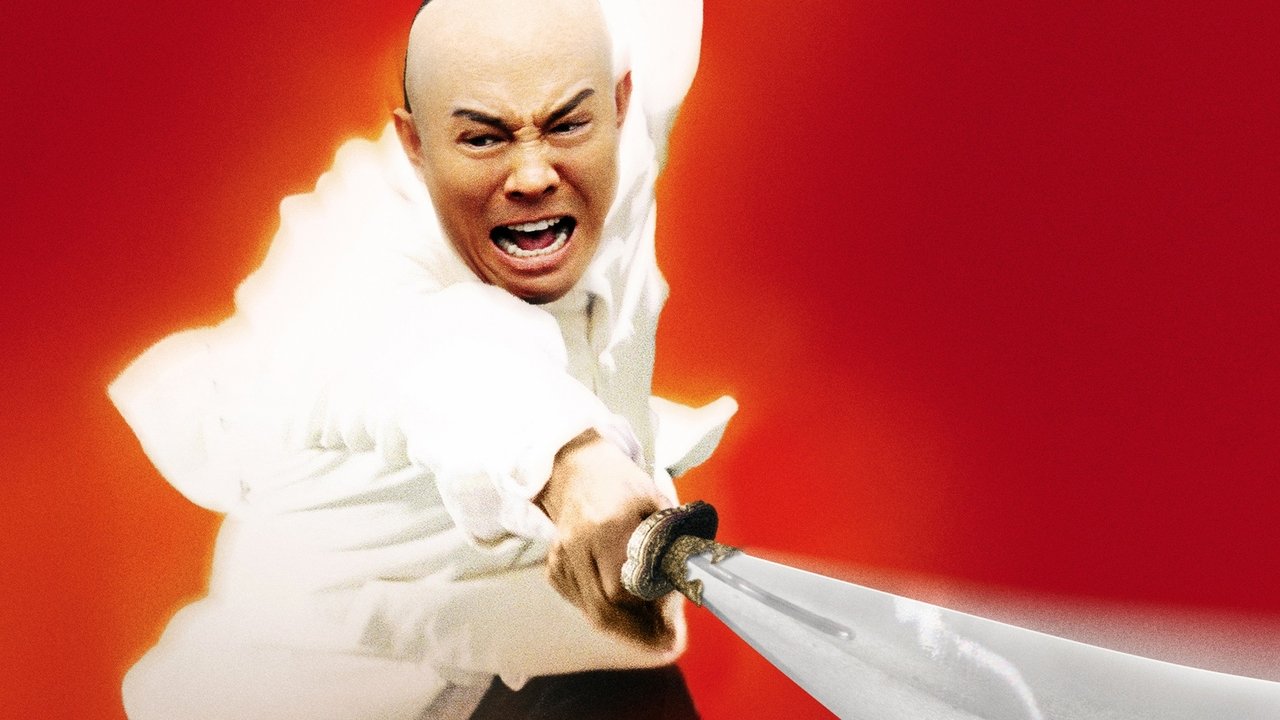
Martial arts legend Huo Yuanjia became the most famous fighter in all of China at the turn of the 20th Century. Huo faced personal tragedy but ultimately fought his way out of darkness and into history, defining the true spirit of martial arts. His self-discovery, and the choices he made, inspired his nation. The son of a great fighter who did not wish for his child to follow in his footsteps, the bullied Huo Yuanjia resolves to teach himself how to fight - and win. Years of training enable him to ace match after match in his home region of Tianjin. But as his fame as a martial arts master grows, so does his pride. After an ill-advised fight leads to another master's death, members of Huo's family are slain in revenge. Grieving and ashamed, Huo wanders the country in shock. Near death, he is rescued by women from an idyllic village, and is offered simple kindness and generosity that help him heal and regain his equilibrium over a period of several years. Huo realizes that the future of martial arts lies in sportsmanship and not brutality, and he rejoins society to apply what he has learned. Returning to Tianjin, Huo takes steps to come to terms with his past and restore his family's name. His evolving, graceful Mizong (Missing) Fist method of fighting brings Huo renewed success, and he forms the progressive Jingwu Sports Federation. Taking note, duplicitous members of the Foreign Chamber of Commerce engineer a Shanghai tournament pitting Huo against four fighters, each representing the major foreign powers in China. Huo commits to the bout and faces off against, respectively, a British boxer, a Spanish swordsman, a Belgian soldier, and a Japanese martial artist. What happened that day in 1910 has never been, and will never be, forgotten in China.
Emotional fingerprint
Fearless (2006) — Movie. Top emotional signals: Inspiration 30%, Excitement 25%, Sadness 20%. Source: AI estimate. Shares describe emotional signal, not percentages of people. Your experience may differ. How we measure
- Inspiration30%
- Excitement25%
- Sadness20%
- Empathy15%
- Satisfaction10%
AI estimate · no viewer votes yet
How we measure
AI estimate
Share of emotional signal, not the percentage of people or a probability of enjoyment.
Each viewer contributes one response, split equally across their selected emotions. When available, an automated estimate supplies a prior that is blended with those responses. Counts include distinct viewers, not automated estimates or archived anonymous votes. Fewer than 3 viewers is an early estimate; more responses do not guarantee certainty.
Why it feels this way
The strongest emotional signals are Inspiration, Excitement, Sadness. Genres: Drama, Action, Biography. AI estimate.
Is it worth watching?
Consider this title if you are looking for Inspiration, Excitement and Sadness. Its IMDb rating of 7.5/10 suggests a generally positive audience reception. For these leading emotions, its Feel Score is 73/100.
How did it make you feel?
Votes are saved to the fingerprint once you’re signed in.
Pick up to three · 0/3
Emotional journey
- Sadness
- Empathy
- Tension
Not enough subtitle evidence
No dominant emotion
Dominant emotion: Tension
Dominant emotion: Empathy
Dominant emotion: Joy
Dominant emotion: Sadness
Dominant emotion: Inspiration
Dominant emotion
| % | Approximate minute | Dominant emotion | Overall intensity | Sadness | Empathy | Tension |
|---|---|---|---|---|---|---|
| 2.5 % | ≈ 3′ | Tension | 48 % | 12 % | 22 % | 45 % |
| 7.5 % | ≈ 8′ | Tension | 46 % | 16 % | 28 % | 43 % |
| 12.5 % | ≈ 13′ | Empathy | 48 % | 19 % | 30 % | 41 % |
| 17.5 % | ≈ 18′ | Tension | 51 % | 13 % | 21 % | 40 % |
| 22.5 % | ≈ 23′ | Joy | 49 % | 6 % | 15 % | 33 % |
| 27.5 % | ≈ 28′ | Joy | 51 % | 8 % | 18 % | 40 % |
| 32.5 % | ≈ 33′ | Tension | 64 % | 23 % | 25 % | 55 % |
| 37.5 % | ≈ 39′ | Sadness | 74 % | 53 % | 43 % | 50 % |
| 42.5 % | ≈ 44′ | Sadness | 78 % | 69 % | 64 % | 34 % |
| 47.5 % | ≈ 49′ | Empathy | 65 % | 53 % | 64 % | 15 % |
| 52.5 % | ≈ 54′ | Inspiration | 51 % | 36 % | 54 % | 6 % |
| 57.5 % | ≈ 59′ | Empathy | 57 % | 45 % | 59 % | 15 % |
| 62.5 % | ≈ 64′ | Sadness | 64 % | 51 % | 59 % | 32 % |
| 67.5 % | ≈ 70′ | Tension | 61 % | 34 % | 44 % | 38 % |
| 72.5 % | ≈ 75′ | Inspiration | 60 % | 14 % | 33 % | 30 % |
| 77.5 % | ≈ 80′ | Inspiration | 63 % | 8 % | 31 % | 43 % |
| 82.5 % | ≈ 85′ | Tension | 74 % | 23 % | 44 % | 69 % |
| 87.5 % | ≈ 90′ | Tension | 86 % | 55 % | 64 % | 73 % |
| 92.5 % | ≈ 95′ | Sadness | 90 % | 75 % | 72 % | 58 % |
| 97.5 % | ≈ 100′ | Not enough subtitle evidence | Not enough subtitle evidence | Not enough subtitle evidence | Not enough subtitle evidence | Not enough subtitle evidence |
Oedipus
Rags to riches: The emotional tone rises from negative to positive.
Riches to rags: The emotional tone falls from positive to negative.
Man in a hole: The tone falls, then recovers.
Icarus: The tone rises, then falls.
Cinderella: The tone rises, falls, then rises again.
Oedipus: The tone falls, rises, then falls again.
AI reading of the film’s English subtitles (dialogue and sound cues) — not viewer votes. How we measure ↗
Kadri — your film companion
AIAsk anything about Fearless. From the film’s own dialogue and FeelDB data, at your spoiler level.
Afterward Reveal viewer responses · may contain spoilers
Viewer responses about feelings after the title ended, separate from feelings while watching. No AI estimates.
0 responses so far
Feeling details appear after at least 3 viewers respond, to protect privacy.
Cast

Nong Jinsun

Lai
Grandma
Zhou
Belgian Fighter
French Businessman
English Boxer
Liu Zhensheng
Xu Dashan
Xia Xiang
Child Huo Yuanjia
Details
- Directed by
- Ronny Yu
- Written by
- Richard Epcar, Chris Chow, Chi-Long To, Christine To Chi-Long
- Type
- Movies
- Released
- 2006
- Runtime
- 103 min
- Country
- China, Hong Kong, United States
- Ratings
- Feels mostly
- Inspiration
- Data updated
Where to watch

Rent


Feels similar
More like this →Emotion overlap shows mood similarity, not a prediction of enjoyment.