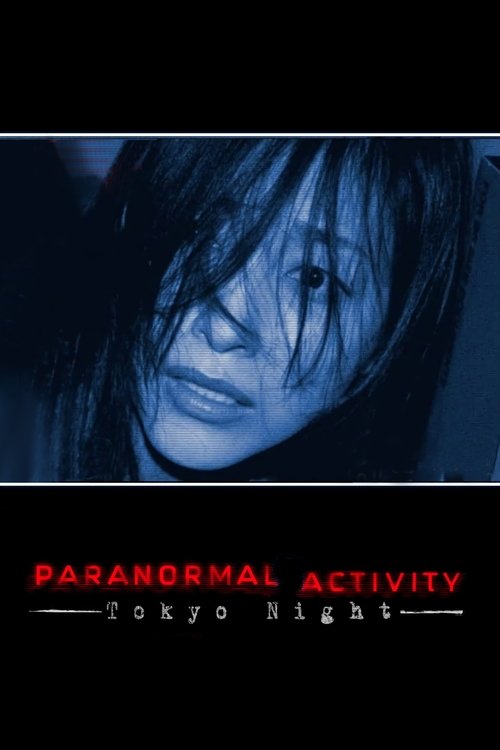
Paranormal Activity 2: Tokyo Night
2010 · 91 min · Director: Toshikazu Nagae
Show plot summary (may contain spoilers)
Haruka Yamano returns from America to Tokyo in a wheelchair, both legs having multiple fractures from a car accident. She is helped by her brother Koichi and their father. Their father travels to Singapore for business meetings and Koichi takes care of his sister and films her most of the time with his camera. The next morning, Haruka tells that her wheelchair has moved during the night and Koichi check the windows of her room to see if a stranger has broken in their house. He tells that probably a spirit had moved the wheelchair and he uses salt near the door of Haruka's bedroom to protect her against evil spirits. However, the next morning they find that the salt is spread near the door. He checks the tape and believes that the house is haunted by a ghost. He decides to tape his room too and during the days, weird noises and events happen in the house. They invite priest Saionji to purify the house against ghosts and over four days nothing unusual happens. Haruka tells to Koichi that, in America, she had hit a woman called Katie that had just murdered her boyfriend and appeared in front of her car. Their father returns home but he needs to travel again. But on the fifth night they see in the tape that the house is still haunted. Koichi decides to call Saionji again, but they learn that the priest had died five nights ago after leaving their house. Haruka discloses to her brother that weird things had happened to her also in America. Furthermore, she tells that she had researched the life of Katie and had found that the girl was also haunted by ghosts. Now the fiend is more violent and still haunts the siblings and they do not know what to do.
Emotional fingerprint
Paranormal Activity 2: Tokyo Night (2010) — Movie. Top emotional signals: Fear 40%, Tension 25%, Anxiety 20%. Source: AI estimate. Shares describe emotional signal, not percentages of people. Your experience may differ. How we measure
AI estimate · no viewer votes yet
How we measure
AI estimate
Share of emotional signal, not the percentage of people or a probability of enjoyment.
Each viewer contributes one response, split equally across their selected emotions. When available, an automated estimate supplies a prior that is blended with those responses. Counts include distinct viewers, not automated estimates or archived anonymous votes. Fewer than 3 viewers is an early estimate; more responses do not guarantee certainty.
Why it feels this way
The strongest emotional signals are Fear, Tension, Anxiety. Genres: Mystery, Horror. AI estimate.
Is it worth watching?
Consider this title if you are looking for Fear, Tension and Anxiety. Its IMDb rating of 5.1/10 suggests a mixed audience reception; consider how well the emotional profile suits you. For these leading emotions, its Feel Score is 58/100.
How did it make you feel?
Votes are saved to the fingerprint once you’re signed in.
Pick up to three · 0/3
Emotional journey
- Tension
- Fear
- Curiosity
Not enough subtitle evidence
No dominant emotion
Dominant emotion: Sympathy
Dominant emotion: Curiosity
Dominant emotion: Tension
Dominant emotion: Fear
Dominant emotion: Relief
Dominant emotion
| % | Approximate minute | Dominant emotion | Overall intensity | Tension | Fear | Curiosity |
|---|---|---|---|---|---|---|
| 2.5 % | ≈ 2′ | Sympathy | 33 % | 10 % | 7 % | 19 % |
| 7.5 % | ≈ 7′ | Curiosity | 40 % | 25 % | 20 % | 35 % |
| 12.5 % | ≈ 11′ | Curiosity | 46 % | 38 % | 30 % | 46 % |
| 17.5 % | ≈ 16′ | Curiosity | 42 % | 36 % | 25 % | 42 % |
| 22.5 % | ≈ 20′ | Curiosity | 37 % | 31 % | 17 % | 32 % |
| 27.5 % | ≈ 25′ | Sympathy | 38 % | 28 % | 14 % | 27 % |
| 32.5 % | ≈ 30′ | Curiosity | 44 % | 33 % | 22 % | 37 % |
| 37.5 % | ≈ 34′ | Tension | 52 % | 44 % | 33 % | 44 % |
| 42.5 % | ≈ 39′ | Not enough subtitle evidence | Not enough subtitle evidence | Not enough subtitle evidence | Not enough subtitle evidence | Not enough subtitle evidence |
| 47.5 % | ≈ 43′ | Fear | 63 % | 59 % | 58 % | 27 % |
| 52.5 % | ≈ 48′ | Tension | 55 % | 47 % | 40 % | 30 % |
| 57.5 % | ≈ 52′ | Relief | 51 % | 37 % | 27 % | 36 % |
| 62.5 % | ≈ 57′ | Tension | 61 % | 52 % | 45 % | 37 % |
| 67.5 % | ≈ 61′ | Fear | 76 % | 72 % | 69 % | 39 % |
| 72.5 % | ≈ 66′ | Tension | 81 % | 78 % | 73 % | 42 % |
| 77.5 % | ≈ 71′ | Fear | 80 % | 78 % | 74 % | 37 % |
| 82.5 % | ≈ 75′ | Not enough subtitle evidence | Not enough subtitle evidence | Not enough subtitle evidence | Not enough subtitle evidence | Not enough subtitle evidence |
| 87.5 % | ≈ 80′ | Not enough subtitle evidence | Not enough subtitle evidence | Not enough subtitle evidence | Not enough subtitle evidence | Not enough subtitle evidence |
| 92.5 % | ≈ 84′ | Not enough subtitle evidence | Not enough subtitle evidence | Not enough subtitle evidence | Not enough subtitle evidence | Not enough subtitle evidence |
| 97.5 % | ≈ 89′ | Not enough subtitle evidence | Not enough subtitle evidence | Not enough subtitle evidence | Not enough subtitle evidence | Not enough subtitle evidence |
AI reading of the film’s English subtitles (dialogue and sound cues) — not viewer votes. How we measure ↗
Kadri — your film companion
AIAsk anything about Paranormal Activity 2: Tokyo Night. From the film’s own dialogue and FeelDB data, at your spoiler level.
Afterward Reveal viewer responses · may contain spoilers
Viewer responses about feelings after the title ended, separate from feelings while watching. No AI estimates.
0 responses so far
Feeling details appear after at least 3 viewers respond, to protect privacy.
Cast
Jun Nagoshi
Kure Misuzu
Shigeyuki Yamano
Mai Yaguchi
Exorcist
Exorcist's Assistant
Details
- Directed by
- Toshikazu Nagae
- Written by
- Oren Peli, Toshikazu Nagae
- Type
- Movies
- Released
- 2010
- Runtime
- 91 min
- Country
- Japan
- Ratings
- Feels mostly
- Fear
- Data updated
Where to watch
Feels similar
More like this →Emotion overlap shows mood similarity, not a prediction of enjoyment.