Some Time Later
2018 · 96 min · Director: José Luis Cuerda, José Luis Cuerda
Show plot summary (may contain spoilers)
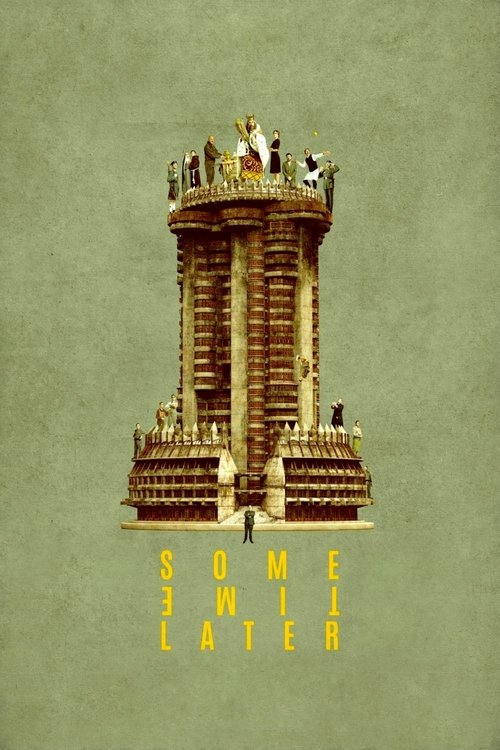
Distant future. The year is 9177, century up, century down, and the entire world has been reduced to a single skyscraper in the middle of a desert in the middle of nowhere. In this Representative Building live the elite of the society and the living forces of it, composed by the absent-minded king, the mayor, his chief of staff, and beauty girl Méndez, the two remaining civil guards Don Antonio and Morris, the two remaining police, Arriondas and Pozueco, the only remaining Admiral Pacheco, hairdressers Justo and Agustín, bartender Pastrana, an old shepherd, priest Father Mirraño, friar Fray Vicente, nun Sor Sacramento, and janitor Eufemiano. In a dense forest outside the Building live the rest of the world in a camp full of poverty and empty of resources. In this depressive place lives José María, a rude man who dreams of selling the tasty lemonade he makes. But when he moves to the Building, he is stopped by Eufemiano, who meets the mayor looking to warn him about the anti-natural that an unemployed has a job. In the Building things are complicated: Justo, tired of not having clients in his barber shop due to the fame of Agustín and his poems, kills Agustín dominated by the jealousy, but the king absolves Justo of the crime and he blames José María by simple caprice. Denying the guilt, José María resists arrest and returns to the Building to sell lemonade, where he meets Méndez, who examines the lemons to test the quality. When the king decrees that Méndez has been chosen to be the mother of a future prince to continue the dynasty, Méndez joins José María and his best friend Galbarriato, who falls in love with her, in a riot about the rights of the unemployed in the camp. While Justo is visited by Agustín's ghost, Fray Vicente and Sor Sacramento join the revolution and Don Antonio and Morris try to balance the situation in an attempt at peace, José María, Galbarriato, and Méndez start the revolution of the camp against the Building, but the king has an idea to suffocate the riot in the most unexpected way.
Emotional fingerprint
Some Time Later (2018) — Movie. Top emotional signals: Humor 35%, Confusion 25%, Awe 20%. Source: AI estimate. Shares describe emotional signal, not percentages of people. Your experience may differ. How we measure
AI estimate · no viewer votes yet
How we measure
AI estimate
Share of emotional signal, not the percentage of people or a probability of enjoyment.
Each viewer contributes one response, split equally across their selected emotions. When available, an automated estimate supplies a prior that is blended with those responses. Counts include distinct viewers, not automated estimates or archived anonymous votes. Fewer than 3 viewers is an early estimate; more responses do not guarantee certainty.
Why it feels this way
The strongest emotional signals are Humor, Confusion, Awe. Genres: Comedy, Sci-Fi. AI estimate.
Is it worth watching?
Consider this title if you are looking for Humor, Confusion and Awe. Its IMDb rating of 5.7/10 suggests a mixed audience reception; consider how well the emotional profile suits you. For these leading emotions, its Feel Score is 62/100.
How did it make you feel?
Votes are saved to the fingerprint once you’re signed in.
Pick up to three · 0/3
Emotional journey
- Humor
- Sadness
- Tension
Not enough subtitle evidence
No dominant emotion
Dominant emotion: Curiosity
Dominant emotion: Humor
Dominant emotion: Tension
Dominant emotion: Sadness
Dominant emotion
| % | Approximate minute | Dominant emotion | Overall intensity | Humor | Sadness | Tension |
|---|---|---|---|---|---|---|
| 2.5 % | ≈ 2′ | Curiosity | 45 % | 38 % | 5 % | 4 % |
| 7.5 % | ≈ 7′ | Humor | 51 % | 48 % | 5 % | 8 % |
| 12.5 % | ≈ 12′ | Humor | 52 % | 51 % | 8 % | 13 % |
| 17.5 % | ≈ 17′ | Humor | 52 % | 50 % | 15 % | 18 % |
| 22.5 % | ≈ 22′ | Humor | 54 % | 51 % | 19 % | 18 % |
| 27.5 % | ≈ 26′ | Humor | 57 % | 54 % | 17 % | 18 % |
| 32.5 % | ≈ 31′ | Humor | 60 % | 56 % | 18 % | 23 % |
| 37.5 % | ≈ 36′ | Humor | 61 % | 57 % | 18 % | 28 % |
| 42.5 % | ≈ 41′ | Humor | 60 % | 55 % | 16 % | 36 % |
| 47.5 % | ≈ 46′ | Humor | 59 % | 53 % | 18 % | 39 % |
| 52.5 % | ≈ 50′ | Humor | 58 % | 55 % | 16 % | 31 % |
| 57.5 % | ≈ 55′ | Humor | 58 % | 56 % | 13 % | 31 % |
| 62.5 % | ≈ 60′ | Humor | 60 % | 54 % | 13 % | 40 % |
| 67.5 % | ≈ 65′ | Humor | 59 % | 50 % | 18 % | 43 % |
| 72.5 % | ≈ 70′ | Humor | 54 % | 45 % | 25 % | 34 % |
| 77.5 % | ≈ 74′ | Humor | 53 % | 44 % | 28 % | 34 % |
| 82.5 % | ≈ 79′ | Tension | 64 % | 43 % | 35 % | 51 % |
| 87.5 % | ≈ 84′ | Tension | 71 % | 39 % | 50 % | 53 % |
| 92.5 % | ≈ 89′ | Sadness | 66 % | 40 % | 55 % | 29 % |
| 97.5 % | ≈ 94′ | Sadness | 60 % | 43 % | 50 % | 15 % |
Riches to rags
Rags to riches: The emotional tone rises from negative to positive.
Riches to rags: The emotional tone falls from positive to negative.
Man in a hole: The tone falls, then recovers.
Icarus: The tone rises, then falls.
Cinderella: The tone rises, falls, then rises again.
Oedipus: The tone falls, rises, then falls again.
AI reading of the film’s English subtitles (dialogue and sound cues) — not viewer votes. How we measure ↗
Kadri — your film companion
AIAsk anything about Some Time Later. From the film’s own dialogue and FeelDB data, at your spoiler level.
Afterward Reveal viewer responses · may contain spoilers
Viewer responses about feelings after the title ended, separate from feelings while watching. No AI estimates.
0 responses so far
Feeling details appear after at least 3 viewers respond, to protect privacy.
Cast


Zumalacárregui
Isabel
Zalduendo
Pozueco
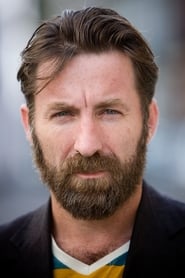
Pacheco
Sara Gutemberg
Perico
Details
- Directed by
- José Luis Cuerda, José Luis Cuerda
- Written by
- José Luis Cuerda, José Luis Cuerda
- Type
- Movies
- Released
- 2018
- Runtime
- 96 min
- Country
- Spain, Portugal
- Ratings
- Feels mostly
- Humor
- Data updated
Where to watch
Feels similar
More like this →Emotion overlap shows mood similarity, not a prediction of enjoyment.