
Hannah and Her Sisters
1986 · 107 min · Director: Woody Allen
Show plot summary (may contain spoilers)
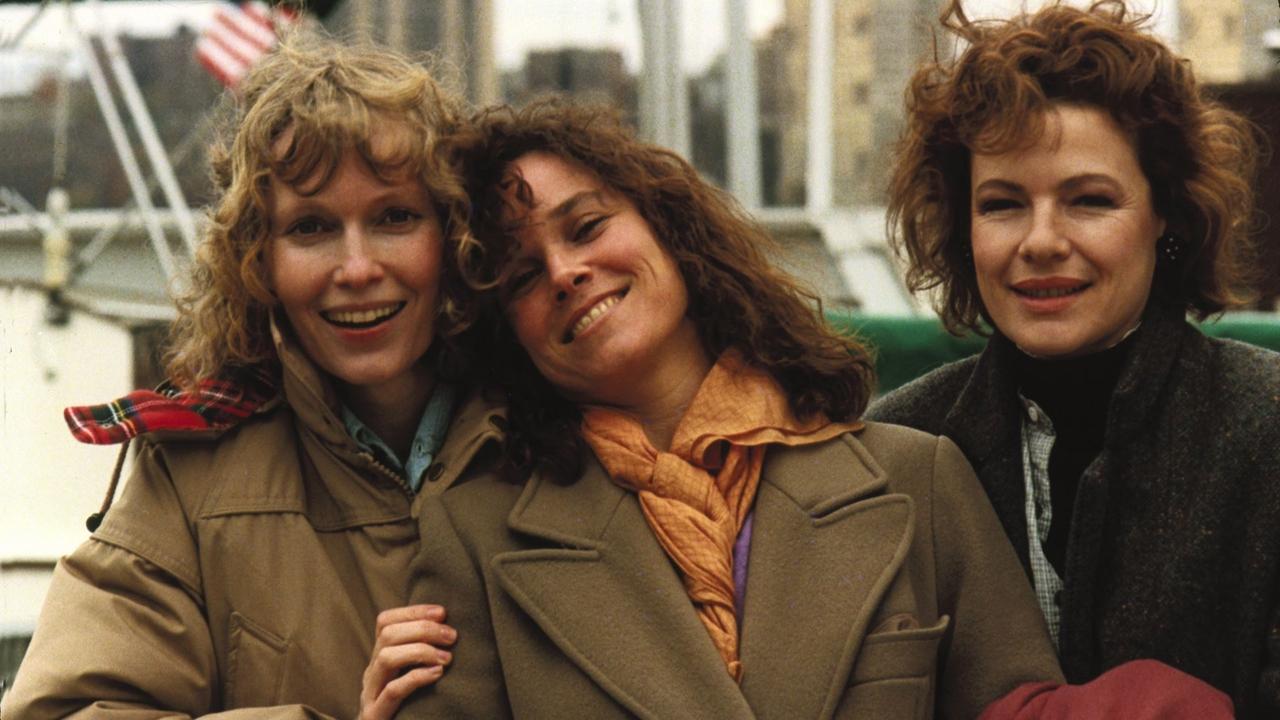
Hannah, Holly, and Lee are adult sisters from a show business family, their boozy actress mother who still believes she's an ingénue that can attract any man she wants, despite still being married to the girls' father, Evan. Hannah, on her second marriage to a man named Elliot, a financial advisor, is the success of the family, taking a break from her acting career to raise her children. Everyone turns to her for advice, while she never talks to others about what she needs or feels. Her first husband, Mickey, is a comedy show writer and hypochondriac, who is going through a crisis as he mistakenly believes he will die soon without a clear belief, as a non-practicing Jew, of what will happen to him in the afterlife. Single Holly is the insecure flaky sister, a struggling and thus continually unemployed actress, who has just started a catering business with her actress friend April, in order to do something constructive with her life. In her own security, Hannah even set up Holly and Mickey together following her own break-up with Mickey, Holly and Mickey's sole date which arguably was the worst night in both their lives. Holly turns to Hannah for everything in her life, including money, despite feeling Hannah overly judgmental about her failures. It's during a catering job that Holly and April meet David, an architect, who seems interested in both of them. Holly's insecurities may threaten her potential relationship with David and friendship with April. Lee, who collects unemployment, is metaphorically the family's piece of clay waiting for the right artist to mold her. She has long lived with artist Frederick, who has contempt for everyone except her, and as such relies on her for whatever his connection to the outside world. This already complex collective becomes even more complex when Elliot contemplates telling Lee that he has fallen in love with her. His attraction to her is as much feeling unneeded by Hannah, who he does not want to hurt regardless of what he decides to do with respect to Lee.
Emotional fingerprint
Hannah and Her Sisters (1986) — Movie. Top emotional signals: Empathy 30%, Humor 25%, Melancholy 20%. Source: AI estimate. Shares describe emotional signal, not percentages of people. Your experience may differ. How we measure
- Empathy30%
- Humor25%
- Melancholy20%
- Love15%
- Hope10%
AI estimate · no viewer votes yet
How we measure
AI estimate
Share of emotional signal, not the percentage of people or a probability of enjoyment.
Each viewer contributes one response, split equally across their selected emotions. When available, an automated estimate supplies a prior that is blended with those responses. Counts include distinct viewers, not automated estimates or archived anonymous votes. Fewer than 3 viewers is an early estimate; more responses do not guarantee certainty.
Why it feels this way
The strongest emotional signals are Empathy, Humor, Melancholy. Genres: Comedy, Drama. AI estimate.
Is it worth watching?
Consider this title if you are looking for Empathy, Humor and Melancholy. Its IMDb rating of 7.8/10 suggests a generally positive audience reception. For these leading emotions, its Feel Score is 74/100.
How did it make you feel?
Votes are saved to the fingerprint once you’re signed in.
Pick up to three · 0/3
Emotional journey
- Love
- Tension
- Sadness
Not enough subtitle evidence
No dominant emotion
Dominant emotion: Love
Dominant emotion: Tension
Dominant emotion: Humor
Dominant emotion: Sadness
Dominant emotion: Relief
Dominant emotion
| % | Approximate minute | Dominant emotion | Overall intensity | Love | Tension | Sadness |
|---|---|---|---|---|---|---|
| 2.5 % | ≈ 3′ | Love | 44 % | 42 % | 20 % | 14 % |
| 7.5 % | ≈ 8′ | Love | 43 % | 32 % | 24 % | 16 % |
| 12.5 % | ≈ 13′ | Tension | 45 % | 16 % | 37 % | 19 % |
| 17.5 % | ≈ 19′ | Tension | 46 % | 13 % | 41 % | 22 % |
| 22.5 % | ≈ 24′ | Love | 45 % | 27 % | 37 % | 26 % |
| 27.5 % | ≈ 29′ | Tension | 49 % | 34 % | 39 % | 32 % |
| 32.5 % | ≈ 35′ | Humor | 52 % | 34 % | 41 % | 30 % |
| 37.5 % | ≈ 40′ | Love | 55 % | 38 % | 45 % | 28 % |
| 42.5 % | ≈ 45′ | Sadness | 62 % | 38 % | 54 % | 37 % |
| 47.5 % | ≈ 51′ | Tension | 69 % | 36 % | 64 % | 41 % |
| 52.5 % | ≈ 56′ | Tension | 64 % | 30 % | 58 % | 38 % |
| 57.5 % | ≈ 62′ | Humor | 51 % | 22 % | 42 % | 33 % |
| 62.5 % | ≈ 67′ | Sadness | 48 % | 18 % | 39 % | 32 % |
| 67.5 % | ≈ 72′ | Humor | 51 % | 15 % | 43 % | 34 % |
| 72.5 % | ≈ 78′ | Sadness | 54 % | 17 % | 46 % | 41 % |
| 77.5 % | ≈ 83′ | Sadness | 58 % | 27 % | 48 % | 50 % |
| 82.5 % | ≈ 88′ | Sadness | 59 % | 35 % | 48 % | 48 % |
| 87.5 % | ≈ 94′ | Humor | 58 % | 33 % | 44 % | 37 % |
| 92.5 % | ≈ 99′ | Relief | 66 % | 44 % | 34 % | 23 % |
| 97.5 % | ≈ 104′ | Love | 75 % | 63 % | 18 % | 12 % |
Man in a hole
Rags to riches: The emotional tone rises from negative to positive.
Riches to rags: The emotional tone falls from positive to negative.
Man in a hole: The tone falls, then recovers.
Icarus: The tone rises, then falls.
Cinderella: The tone rises, falls, then rises again.
Oedipus: The tone falls, rises, then falls again.
AI reading of the film’s English subtitles (dialogue and sound cues) — not viewer votes. How we measure ↗
Kadri — your film companion
AIAsk anything about Hannah and Her Sisters. From the film’s own dialogue and FeelDB data, at your spoiler level.
Afterward Reveal viewer responses · may contain spoilers
Viewer responses about feelings after the title ended, separate from feelings while watching. No AI estimates.
0 responses so far
Feeling details appear after at least 3 viewers respond, to protect privacy.
Cast











Details
- Directed by
- Woody Allen
- Written by
- Woody Allen
- Type
- Movies
- Released
- 1986
- Runtime
- 107 min
- Country
- United States
- Ratings
- Feels mostly
- Empathy
- Data updated
Where to watch
Subscription


Free


Rent


Feels similar
More like this →Emotion overlap shows mood similarity, not a prediction of enjoyment.